Claris FileMaker 2025 Platform in depth - New features & benefits

Ben Fletcher • 14 July 2025

While the new AI features of Claris FileMaker 2025 will undoubtedly generate the most headline interest, there are a number of other new under the hood features which are no less important to professional FileMaker developers.  Here is a quick overview of some of the new features we will be using immediately to speed and ease our development, as well as improving the real world performance of apps:


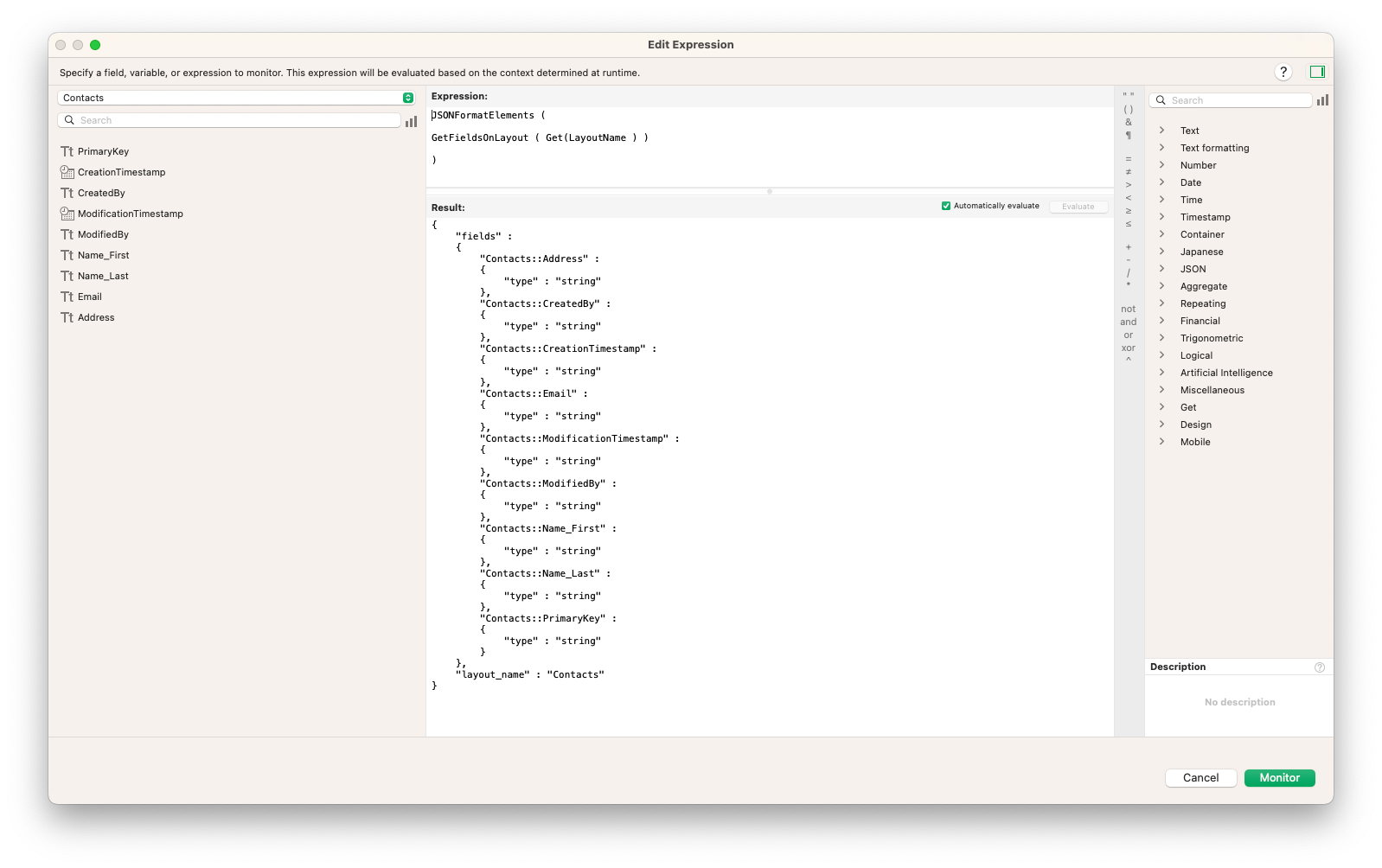
1) GetFieldsOnLayout function

Returns a list of the fields on a layout as JSON data. Includes only the fields that are accessible to a find.
Why we're excited:

This is useful for AI searches: it greatly helps when debugging what field information is sent by the Perform Find by Natural Language script step. We previously used the FieldNames function which returns a list of all fields on layout (accessible to a find or not).  Equally, it can be used to create html versions of layouts in web viewers.


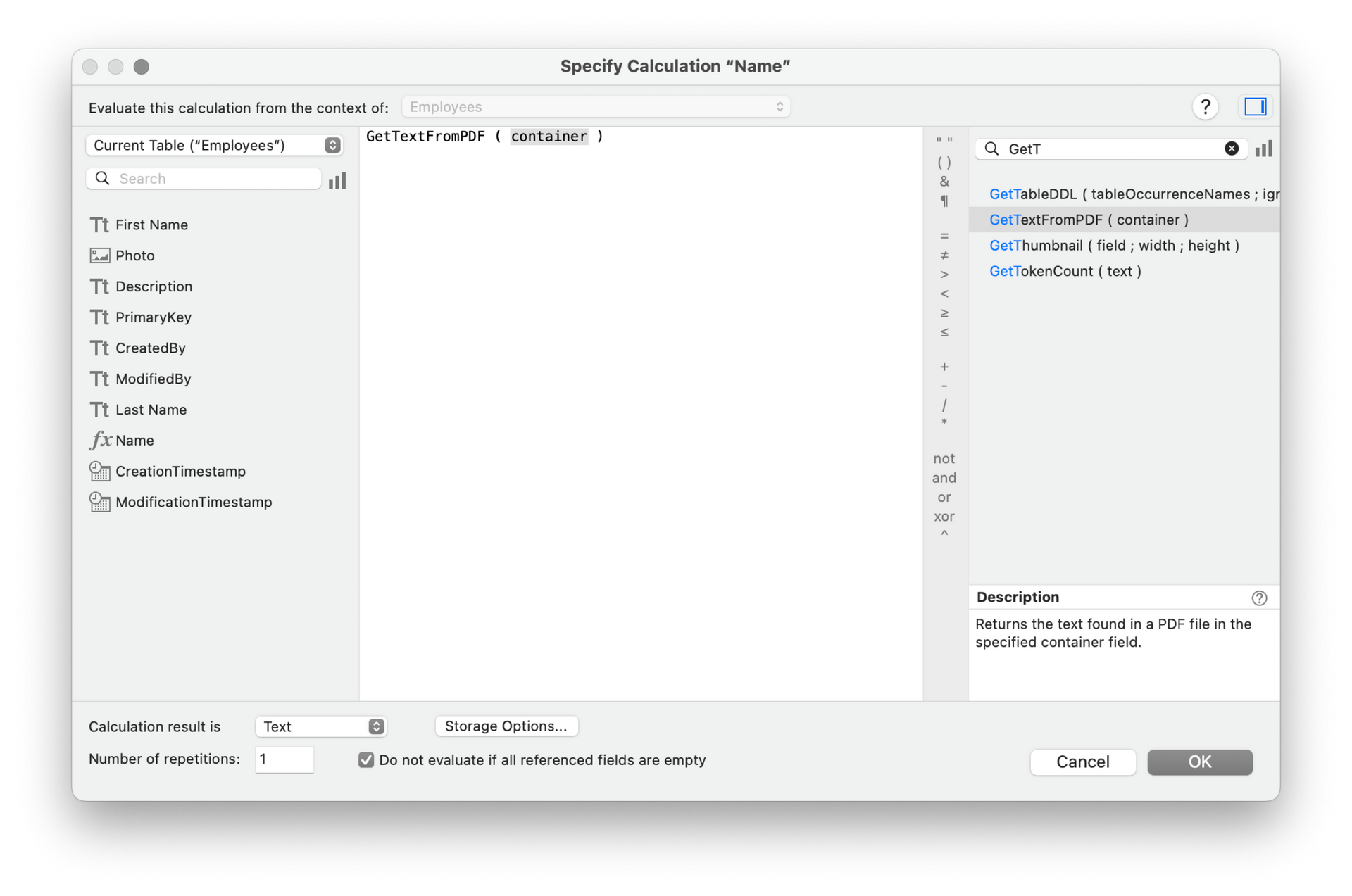
2) GetTextFromPDF Calculation Function


Returns the text found in a PDF file in the specified container field. Can be used to include PDF text in finds, add PDF text to a RAG space with the Perform RAG Action script step, or otherwise make it available to AI models.
Why we're excited:

This functionality was previously only possible with additional 3rd party plug-ins (an additional cost on top of FileMaker licensing which is no longer required with FileMaker 2025).  It makes it possible to store the contents of PDFs in an indexed field and use this in finds.  The function can also be combined with FileMaker AI functions to convert text to structured data (i.e. pulling invoice line date from a PDF document to generate line items within a database).


3) Go to List of Records Script Step


Goes to layout and returns found set specified by a list of record IDs. You can provide the record IDs as a list of values separated by carriage returns, a JSON array of record IDs as strings or numbers, or a JSON array of objects with recordId keys and values. Record IDs can be obtained using the new GetRecordIDsFromFoundSet function.
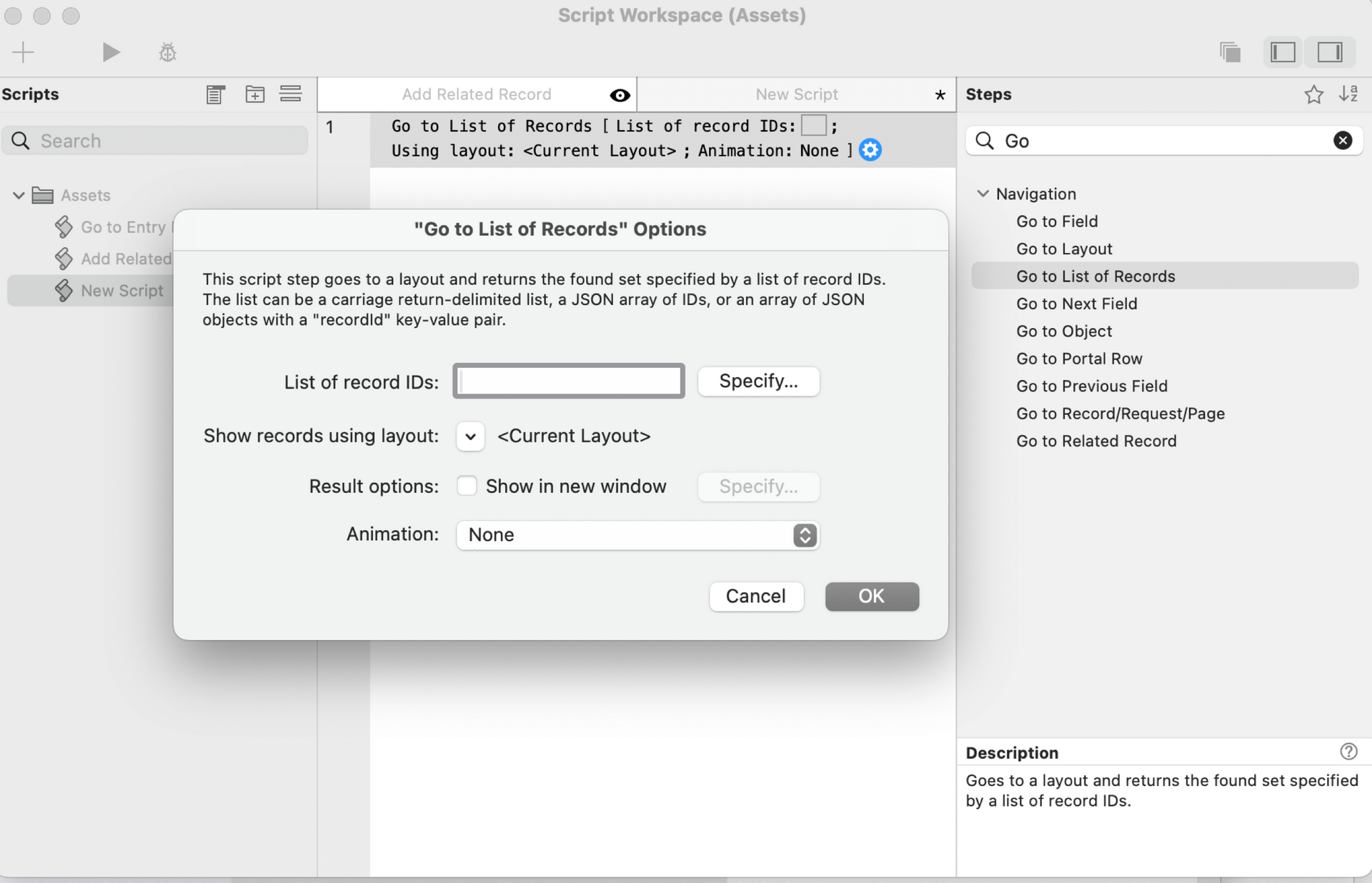

Why we're excited:

We previously would have had to use Global field and relationship - this new approach saves development time and simplifies database structure.


4) Folders for Custom Functions

Organizes custom functions into folders, enhancing manageability and visibility similar to script and layout folders. Keep your custom functions organized and easier to find.
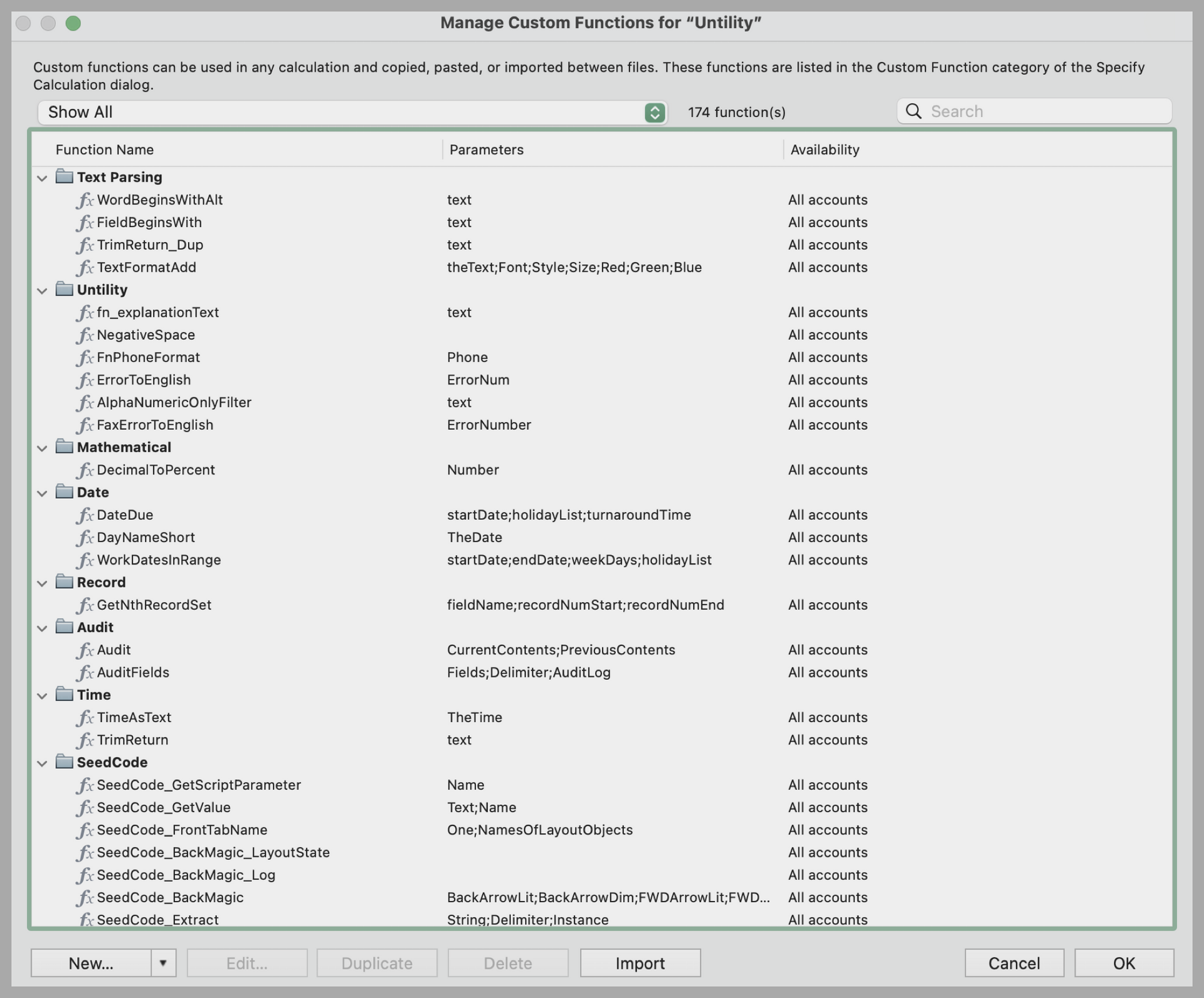

Why we're excited:

Will make organising Custom Functions much easier and speed development


5) Collapse Script Parts

Collapse and expand blocks of control script steps (for example, If, Loop, and Open Transaction) to provide a better overview of complex scripts.
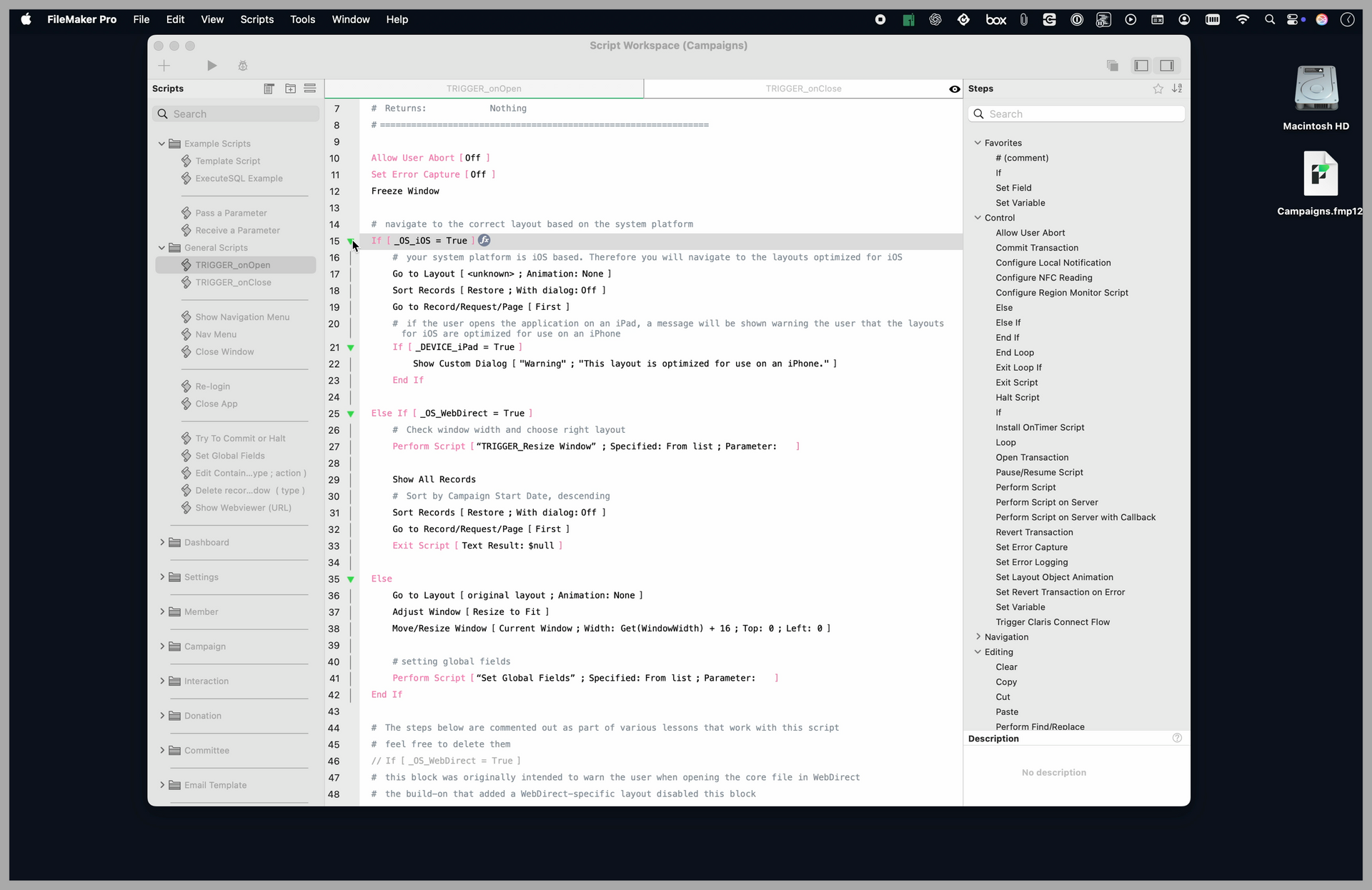


Why we're excited:

More readable scripts, easier to identify blocks of code within loops or if statements. Will save development time.


6) macOS UI Refresh

A user interface overhaul aimed at modernizing FileMaker Pro’s appearance and functionality on macOS, focusing on improving the developer and end-user experience.
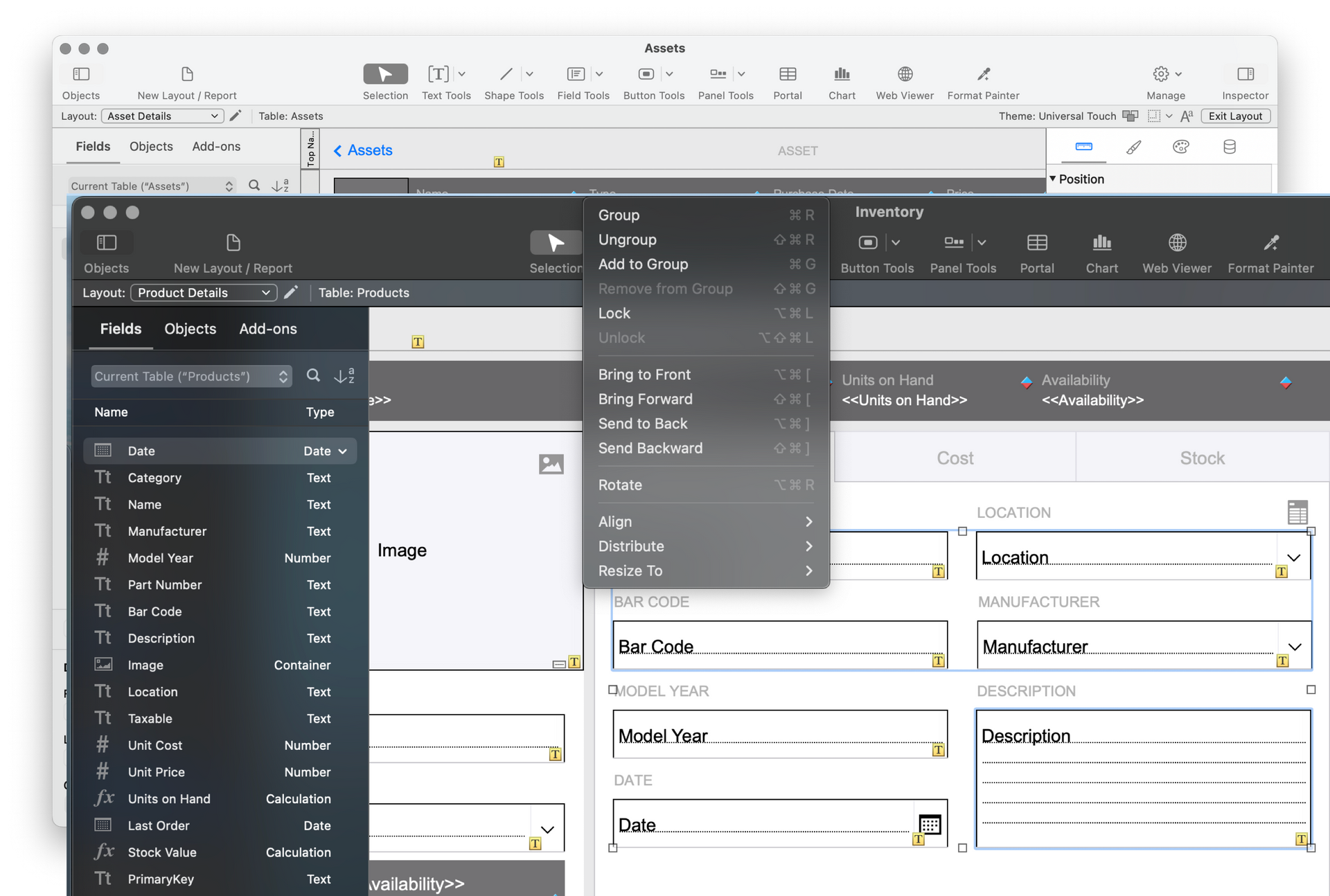
Why we're excited:

Provides a tidier and more logical development environment.


7) Add/Remove Object to group

Add objects to existing groups by selecting both the group and the object to be added without needing to ungroup first, streamlining the process of organising layout objects.
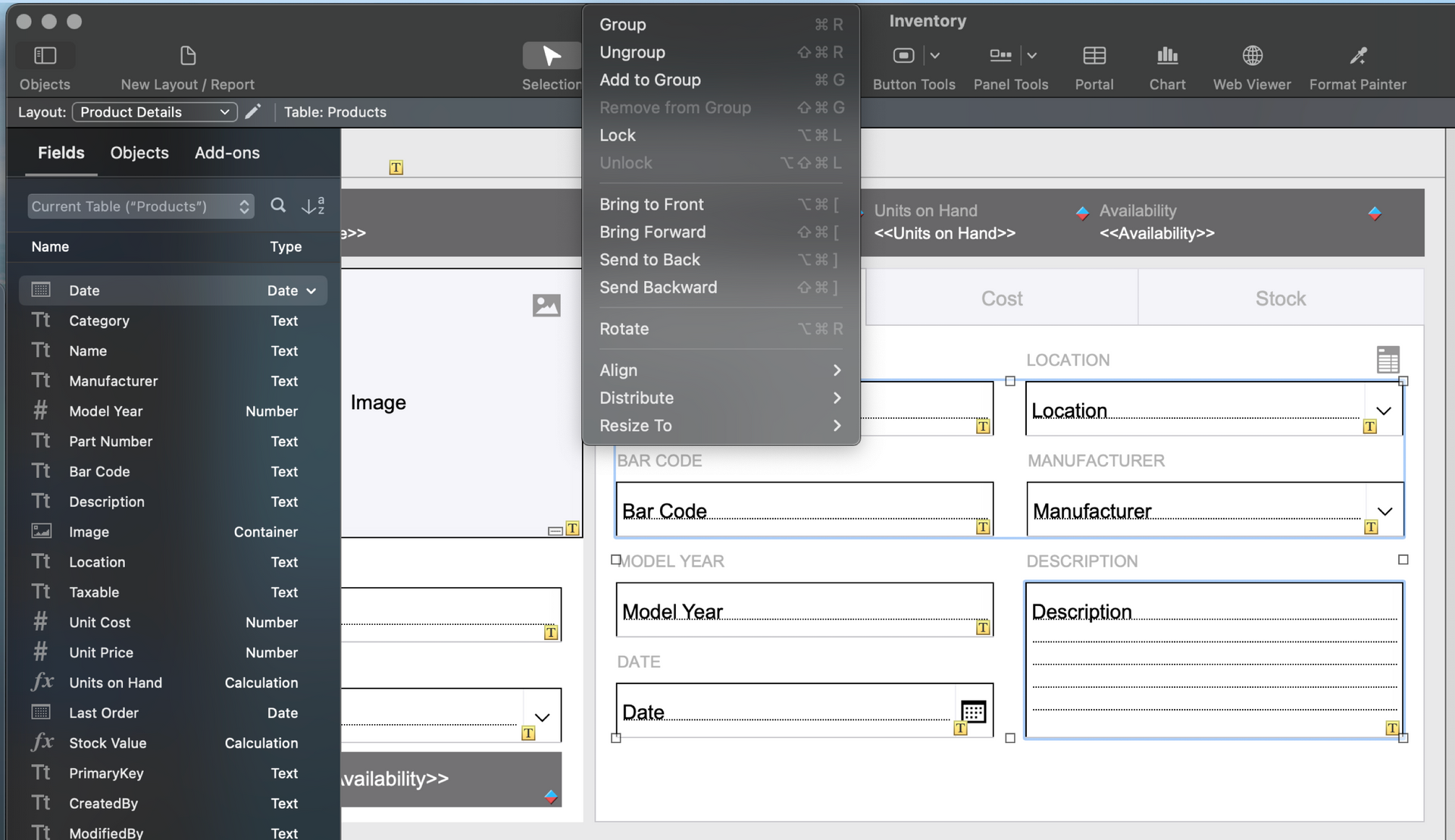

Why we're excited:

Will save time in development.  With complex interfaces, it is especially common to have a button script or script trigger is attached a group of objects.


8) GetRecordIDsFromFoundSet Function

Returns record IDs from the current found set as a list or a JSON array. The record IDs can optionally be returned as values and ranges of values. The output can be used with the new Go to List of Records script step.
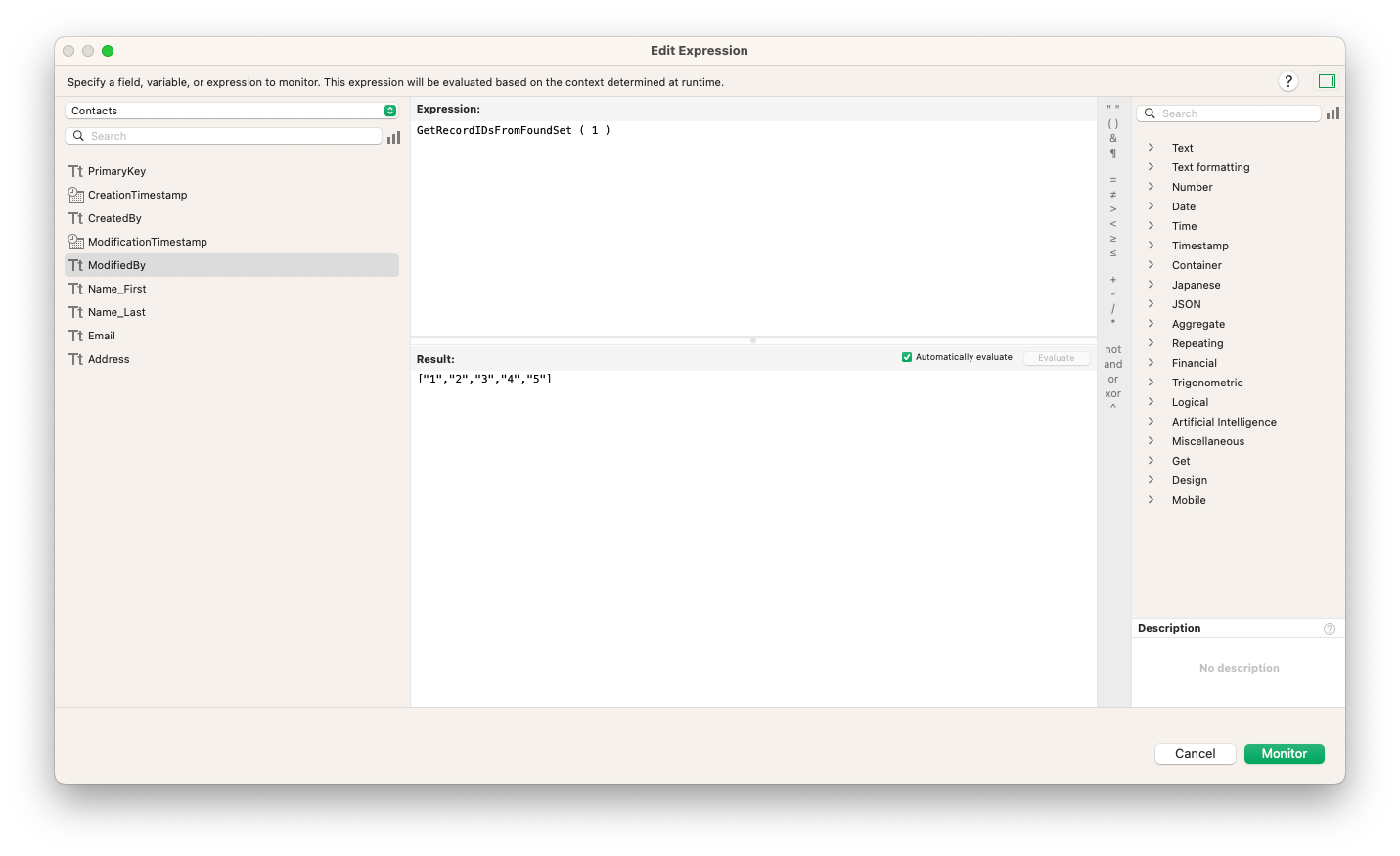

Why we're excited:

Previously required a Summary Field (or a script) which could cause issues with large found sets. Makes it much easier to store a reference to the current found set - especially when sending this to a script to be performed on the server (PSoS).


9) JSONParse Function

Parses text as JSON data and keeps the parsed JSON representation in memory for you to reuse with other JSON functions. You can significantly improve performance of JSON calculations that reuse the same JSON data many times by using this function first, for example, to store the result in a variable: 

Set Variable [ $json ; Value: JSONParse ( "[3]" ) ]


Why we're excited:

Will speed up JSON processing


10) JSONParsedState Function

Examines the input passed into it to determine whether it has parsed JSON data as part of it (that is, JSON data previously parsed by the JSONParse function). The function returns 0 if JSON is not parsed, -1 if parsed but invalid, or a positive number representing the JSON type if parsed and valid.


Why we're excited:

Used with JSONParse this will speed up JSON processing


11) Upgrade to major releases using Check for Updates

FileMaker Pro 2025 is the first major release that you can upgrade to from the latest version of the previous major release (FileMaker Pro 2024) by clicking Help > Check for Updates or when the Software Update dialog opens when you start FileMaker Pro, if you have an eligible license.


Windows: Previously, major FileMaker Pro releases were installed alongside any previous versions you had installed. Starting with FileMaker Pro 2025, installing the latest major version of FileMaker Pro replaces the previous version.


Why we're excited:

This will make it easier for customers to update their FileMaker installed version.


12) Save a Copy as XML - update

When a FileMaker Pro file is saved using Save a Copy as XML, the root FMSaveAsXML element of the XML file now includes a Has_DDR_INFO attribute that's set to True when the Include details for analysis tools option is selected. This attribute allows analysis tools to quickly determine whether the file includes the DDR_INFO element containing additional information without parsing the entire file.


Why we're excited:

This will streamline the parsing of exported XML files.


Need help to upgrade your FileMaker?

No matter your current version, our consulting team can assist you through the upgrade process, even if your app involves complex dependencies, such as integrations with legacy software or plugins.


Ultimately, we believe that your software should work for you, not the other way around. That's why we're committed to ensuring your upgrade is more than a simple technical exercise—it's a strategic move that aligns with your business' evolution. If you're ready to harness the power of the modern, interconnected, and dynamic Claris FileMaker 2025, get in touch with us today. We're here to help you achieve your business goals and offer a free initial consultation for all new prospective customers.


by Ben Fletcher 16 January 2026
This is the 2nd part, continuing on from 1st part , we asked our most veteran consultant developer, Jonathan Taberner and the most recent addition, Salman Javaherai to contrast their experiences and provide an insight for our customers as to what a working day looks like for a professional Claris FileMaker Developer in 2026. Artificial IntelligenceI & Large Language Models in FileMaker Development How are you (or the team) experimenting with AI and LLMs within FileMaker? SJ: We’re experimenting with using an AI chatbot connected to internal knowledgebase. The idea is to give our team quick access to insights or historical solutions without having to dig through old documentation. It’s already proving useful for speeding up internal troubleshooting. JT: We are offering our customers natural language searches as part of standard development. What are the biggest opportunities you see for private AI in client solutions? SJ: A huge opportunity is for technical support teams, they could resolve tickets faster by having AI automatically referencing similar past issues, without the risk of leaking customer information or passwords. JT: The ability to run AI searches and summaries without sending data outside of the company network. Can you give an example where AI/LLMs made a meaningful impact in a client project (or could in the near future)? SJ: A practical near-term example is support ticket triage. AI could compare a new issue to similar historical cases and suggest likely pathways or fixes. It won’t replace support staff, but it will make them dramatically more efficient by removing repetitive searching. It could even make suggestions directly to the customer before the engineer has even read it, or it could guide the customer in the ticket submission process, by ensuring all required information is submitted (which is never a one size fits all process). JT: I am currently working on a solution for an Engineering customer to verify product certificates against UK ISO standard specifications. We are also looking at using AI as an OCR tool to extract text where the certificate is saved as an image. Collaboration & Problem-Solving What’s the toughest technical challenge you’ve solved recently—and how did you tackle it? SJ: One of the toughest challenges involved WebDirect worker machines not firing up reliably. The Claris documentation wasn’t quite clear on the networking requirements, so I built a testing environment and worked through it via trial and error, supplemented by advice from the Claris Community . Another challenge was a WebViewer freeze triggered by a hide condition—ultimately it turned out to be a FileMaker bug. I reported it and implemented a workaround, removing the hide condition and rethinking how layout objects were handled. JT: We recently collaborated with a third party designer for the development of the Venue Dashboard for Band On The Wall . The designs looked great but some were a challenge to replicate in Claris FileMaker while retaining a robust user experience. We used FileMaker’s hide/show layout objects to create the illusion of subsummary parts in a list – also made good use of card windows. We (and the client) were very pleased with the results! How does the team collaborate to brainstorm solutions or keep up with the fast pace of Claris updates? SJ: Our regular team meetings always include space for general questions, sharing discoveries, and helping each other think through architectural decisions. It creates a steady flow of knowledge and keeps us aligned with platform changes. JT: We regularly attend Claris Webinars and share development tips within the team. We discuss challenging or problematic development in our regular team meetings. We also have separate scheduled meetups to discuss and update documentation for client solutions. As a developer, how do you keep learning and staying sharp with new FileMaker features? SJ: I regularly read FileMaker blogs, subscribe to community newsletters, and watch YouTube channels like FileMaker Training and FMDisc . I’ve also been going through Claris’s “ Under the Hood ” videos, which offer great context for long term design choices, and deeper architectural understanding. JT: The best incentive I have is that I have never lost my excitement with what can be done with FileMaker – and as this is constantly evolving I always have something to be excited about. I keep an eye on Twitter(X) feeds and bookmark anything of interest for follow-up. Looking Ahead What do you think the next big trend in the Claris ecosystem will be? SJ: think integration of all the components will continue further, with Studio and Connect interacting with Claris FileMaker more seamlessly. JT: The ongoing enhancement of AI features and the evolution of AI services available. We are just at the start of this journey! How do you see AI, Claris Studio, and Claris Connect shaping the future of custom app development? SJ: I think AI will assist in app development, so the developer and client will have an initial and ongoing discussion with the AI, in order to build and maintain solutions. JT: These will all evolve to work more closely with FileMaker to extend capabilities. I also expect AI to integrate and assist with development (while still requiring experienced developer input!) What advice would you give to organisations still running their operations on spreadsheets or outdated systems? SJ: I’d ask them when they last felt passionate about the company mission. Spreadsheets are great for simple tasks, but once they’re being used as a core part of the business, they weigh everyone down by taking up mental energy, due to the inevitable mismatch between their design and company processes, not to mention the inconveniences of cleaning up mistakes made from incorrect data. JT: “Have a look at some of our solutions and see what is possible.” Most clients who come to us with one of these solutions will tell us of their woes with using outdated systems or trying to collaborate on projects using spreadsheets. They are usually excited to hear that data can be shared using FileMaker and that it only needs to be stored once.
by Ben Fletcher 15 January 2026
The work of planning, designing, developing and supporting custom solutions using the Claris FileMaker platform is a core part of DataTherapy's service, providing interesting, challenging and rewarding work for our Team since inception. To celebrate our 31st year of business, we asked our most veteran consultant developer, Jonathan Taberner and the most recent addition, Salman Javaherai to contrast their experiences and provide an insight for our customers as to what a working day looks like for a professional Claris FileMaker Developer in 2026. Background & Daily Workflow What does a typical day look like for you as a FileMaker developer at DataTherapy? SJ: A typical day starts with checking emails and reviewing the progress of any overnight tasks or scheduled scripts, just to make sure everything ran as expected. From there, I usually move between project planning, actual development, and the occasional quote or scoping session for a client request. There is always a satisfying mix of planning, collaboration, problem-solving and building. JT: I usually have some project work on the go but need to balance this with routine tasks such as monitoring server backups and exports and also be available for any requests which come in from our customers with support contracts. If the issue is urgent we look at it straight away – if not we reply and schedule it. If I have the choice I prefer to do the most challenging work in the morning when I am sharpest but doesn’t always work out that way! We all mostly work remotely – I am either in my home office or a shared office space in town. How do you balance client meetings, design, coding, and testing? SJ: For me, it’s all about managing and adhering to my focus levels. Design and testing require the deepest concentration, so I treat those like “deep work” sessions in the Cal Newport sense —time where I try to minimise interruptions and really think through the architecture. Pen and paper, screen off, is really handy here. Coding and client meetings, on the other hand, have more natural breaks and tend to be a bit more caffeinated. When I’m stuck on a tricky problem, I’ll take a short break to let ideas percolate; the elegant solution usually arrives once your brain gets some space. JT: Working as part of a team it is good to spread this out a bit. We usually have several developers on an initial client call and are able to discuss, proof read proposals and sense-check plans, etc. Likewise with testing we can ask another member of the team to test a solution as an end user – even better if they have not been involved in the development progress! What do you enjoy most about building solutions on the Claris FileMaker platform? SJ: Claris FileMaker lets you build almost like a painter paints—you can design the interface, model the data, and shape the logic all in the same space, without constantly jumping between separate tools or layers. In FileMaker, it all happens immediately, right in front of you, which makes the process feel fluid, creative, and incredibly satisfying for both the developer and the client watching it come to life. JT: I am still amazed and excited by how quickly we can build solutions using FileMaker. I enjoy the challenge of trying to produce an elegant solution – efficient coding with a view to speed and robustness of the solution. Best of all is delivering a solution which exceeds the client’s expectations so they are happy and looking forward to the next enhancements. Expertise & Platform Evolution Which version of FileMaker did you first start working with and what is the biggest change or feature that excites your about the most recent FileMaker 2024 & FileMaker 2025 releases? SJ: I started developing back in FileMaker 6, just before the first major change of multi table files was introduced in version 7. In the latest releases, the features that stand out most to me are the improved JSON parsing and the enhanced WebDirect features—especially things like being able to properly disable the back button. JT: The first version of FileMaker I had was version 3. I became a professional developer on version 7 in 2005. It has to be the new AI features in FileMaker 2025 – we are already putting these to good use and this is just the beginning! Which recent FileMaker feature has had the biggest impact on the way you build solutions (e.g., JSON, transactions, script enhancements, Layout UI improvements)? SJ: Transactions have had a huge impact. They let us handle bulk record changes in a safe, controlled way without writing so much defensive code. The Execute FileMaker Data API step is another great addition—it simplifies minor record operations and simplifies scripts. And JavaScript in web viewers has opened the door to more standardised UI components and advanced reporting. JSON took me a little longer to get used to. For a while I just implemented for very specific cases such as bulk record transfers, but now I probably use it in every script for more minor things. JT: JSON – for interaction with third party APIs and a great way to pass data within a solution (eg script parameters). How do you ensure solutions remain scalable, secure, and future-proof? SJ: I try to stick to fundamentals: use as many of the ‘traditional’ FileMaker features as possible, keep the architecture clean, and avoid unnecessary complexity. I’m also cautious about unstored calculations—useful in the right contexts but expensive if overused. I’m also conscious of the risks of “premature abstraction”. You don’t need to eliminate every repetition in a script or calculation if doing so makes the logic harder to read, maintain, or adapt later. FileMaker solutions are inherently fluid—clients often request rapid changes, and we need to deliver quickly—so chasing the “perfectly abstracted” or “textbook-clean” version can actually slow things down. I’ve been caught out with adopting new FileMaker features the moment they appear. New tools are great, but it takes experience to judge when they’ll genuinely save time versus when they add unnecessary complexity. JT: We periodically review solutions which we support for possible enhancements using new features. We design solutions to be scalable to large datasets but some issues still only become evident after the solution is well in use. We are flexible in our coding and pool ideas as a team to achieve greater database efficiency. Claris Stu dio & Connect Have you integrated Claris Studio into your projects yet? What’s been your impression—where does it really shine? SJ: Yes, I’ve tested out Claris Studio integration, for “fire-and-forget” web forms where users need to submit data without having a FileMaker account. The more recent addition of direct access to FileMaker tables makes configuration (not having to use Claris Connect as an intermediary) that much quicker. It’s great to have a truly anonymous and secure way into the FileMaker data. JT: I am currently not significantly using Claris Studio. It has great potential but I still see it as a work in progress. How do you see Claris Connect changing the way clients approach integrations? SJ: Claris Connect lowers the technical barrier for clients who want to link their systems with external services like Mailchimp. Instead of managing APIs or custom scripts, Connect offers a more hands-off, approachable way to automate processes. It brings integrations within reach for organisations that previously would have seen them as too complex. For administrators it’s nice to have the option of having some automated processes outside FileMaker Server. JT: It is very quick and easy to set up an integration using Claris Connect – we use this in combination with custom API solutions. The triggers in Claris Connect are particularly useful. Can you share an example of how you’ve used these tools to streamline client workflows? SJ: One example is an events management client who needed a simple way for staff to submit availability without a set of credentials. Using Claris Studio, we built a clean, login-free submission process that feeds directly back into their FileMaker system. It removed admin overhead and gave staff a frictionless way to provide data. JT: We set up an integration for a jewellery studio between their FileMaker database and Shopify. Triggering when orders change status and uploading product details and pricing. This uses a combination of Claris Connect and custom API coding.
Claris FileMaker Icon
by Ben Fletcher 18 December 2025
Find out what the latest bug fixes are in the Claris FileMaker 2025 (v22.0.4) release are.
Beach & horizon.
by Ben Fletcher 5 November 2025
Are you just surviving with your data — or thriving with it? 💡 Discover how DataTherapy’s Hierarchy of Data maps your journey from basic data integrity to AI-powered innovation.
Law book on a table.
by Ben Fletcher 7 October 2025
Discover 10 hidden GDPR risks in AI adoption and learn how Claris FileMaker helps UK SMEs innovate securely while staying fully compliant.
Stephoscope and medical clipboard.
by Ben Fletcher 18 September 2025
DataTherapy helped St Mark’s Centre streamline cancer research and patient care by unifying databases into a secure, efficient Claris FileMaker system.
Light shines through a window.
by Ben Fletcher 10 September 2025
Windows 10 support ends Oct 14, 2025. Upgrade to Windows 11 and FileMaker 2024 or FileMaker 2025 to stay secure, supported, and future-ready.
by Ben Fletcher 18 August 2025
Want faster, smarter FileMaker apps with AI? We compared gpt-oss, Llama & DeepSeek to find the best local model for Apple hardware. Find out who wins
Happy Student
by Ben Fletcher 12 August 2025
Discover how DataTherapy built a secure, cloud-based academic recruitment portal for The Francis Crick Institute using Platopus SaaS and Claris FileMaker. Streamlined applications, advanced reporting, and Okta authentication deliver a faster, more efficient hiring process.
by Ben Fletcher 10 July 2025
Claris FileMaker 2025 has launched with a range of new features that will undoubtedly make developing new custom apps both quicker and more powerful, but what are the benefits of upgrading if you are currently using an older version of the FileMaker platform? Using a version older than of FileMaker 19? In that case there are even more good reasons to upgrade - contact our team to find out more about the benefits from upgrading that you have been missing out on! Highlighted below are some of the key differences in features between FileMaker v19, 2023 (v20), 2024 (v21) and now 2025 (v22) releases:
More posts